
Guilford Previous Residents Source Map
A Guilford address leaves different kinds of traces in different eras. RecordHub is strongest for the modern recorded-document chain. Map and survey records help keep the lot identity steady. Property cards and MapXpress establish the current parcel, while directories, census pages, newspapers, and preservation files add household or place context. The table keeps those roles separate so an owner name is not mistaken for a complete list of people connected with the address.
| Source | Years or coverage | Where held | What it shows |
|---|---|---|---|
| Guilford RecordHub land records | 04/01/1972-08/19/2026, Volume 192 forward | Town Clerk / Cott | Grantor, grantee, document date, book/page or number, and images where available |
| Guilford maps and surveys | From 10/30/1858, Map 1 forward | RecordHub / Town Clerk | Lots, roads, subdivisions, and legal-description clues |
| Property cards | Current portal 08/17/2026; 2017 and 2013 available | Guilford Assessor | Owner, situs, mailing address, improvements, and assessment; historical gaps apply |
| GIS parcel and aerial layers | Nightly property information; maps July 2026 | MapXpress | Parcel shape, spatial continuity, and aerials from 2005, 2012, 2013, 2016, 2019, and 2023 |
| Regional directories | 1913/14-1928, with documented missing years | EBN / CSL / Gale | Names, street addresses, businesses, and reverse-directory clues |
| Federal census microfilm | 1800-1930 at EBN; 72-year release rule | EBN / National Archives paths | Household snapshot, ages, relationships, and locality |
| Newspapers and obituaries | Local indexes and item-specific coverage | EBN / library databases | Moves, deaths, family ties, events, and dated address clues |
| Building permits | Current online-only route; historical reach not stated | Building / Engineering / Tyler | Construction or change evidence, not a full household record |
| Survey, probate, and cemetery files | 1981 survey and historical holdings | GPA / EBN / PD-34 / GKS | House context, heirs, decedents, and burial identity |
Start with the source that matches the question. Use the current parcel and deed chain for ownership, the directory and census layer for past households, and the library or archive when the online boundary is reached. There is no modern New Haven County recorder for Guilford land records. The practical handoff is the Guilford Town Clerk for local books, the Assessor for cards, EBN for historical collections, and state or district offices for specialized records.
The Guilford RecordHub coverage notice shows the date boundary that controls the online deed trail.
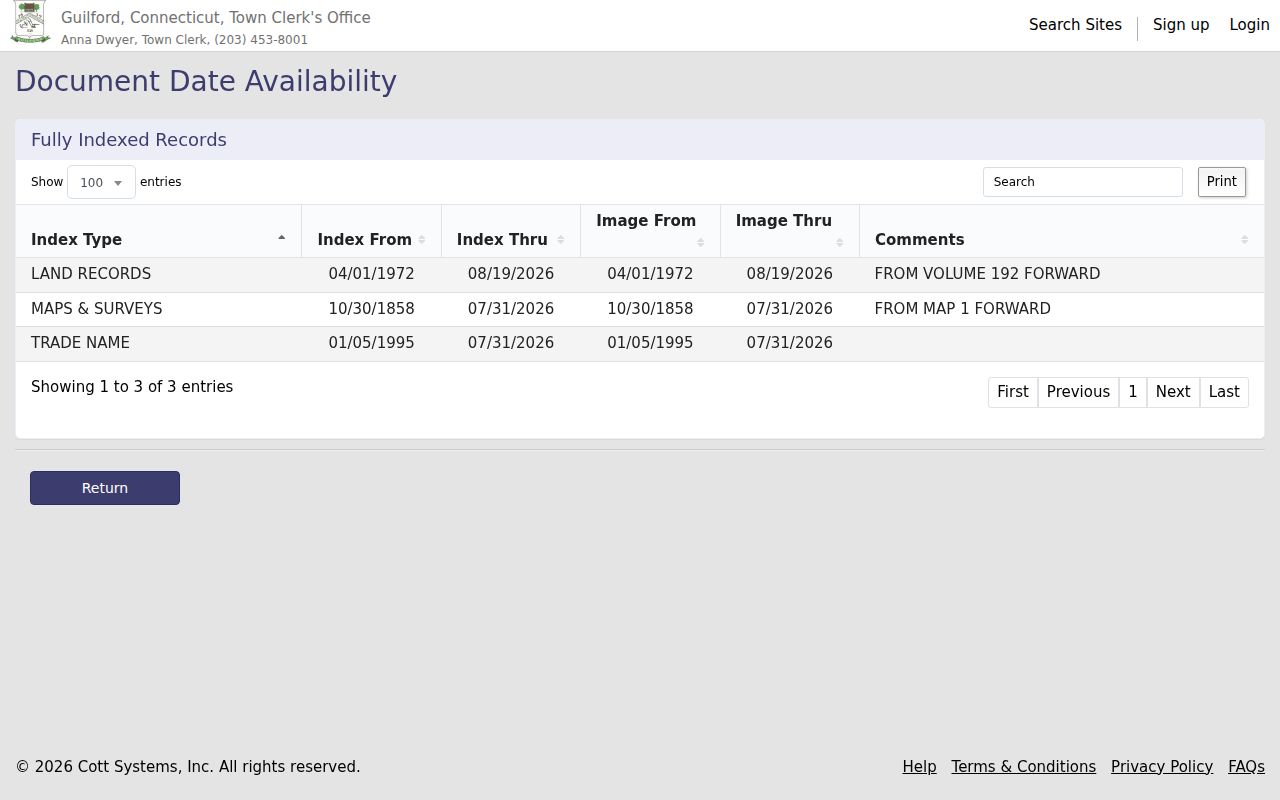
The image is a coverage reference, not a sample person's deed. Record the boundary before moving to older books or library sources.
Start A Guilford Previous-Resident Trail
Begin with the current Guilford Assessor property card, not with a guessed name. Capture the owner-of-record, physical situs, tax-mailing address, MBL or other parcel identifier, legal description, and the card's update date. The property-card portal separates Property Search from Sales Search and accepts owner name, location, street, MBL, unique identifier, and property-use fields. That combination gives the address a stable parcel key before the deed search begins.
The current property-card portal was reported updated on August 17, 2026. Historical request options are uneven: 2017 and 2013 cards are available, the 2007 card was destroyed after state permission dated January 23, 2014, 2002 and 1995 may show only street name and number, and some 1985 cards are missing. A missing card is a retention fact. It does not show that a parcel or person was absent.
Keep mailing and situs data in separate columns. An owner can receive tax mail somewhere else, and the person named on a card may not be the person who used the address. Use the card to identify the parcel and the next record to test the past-resident question.
Search The Latest Guilford Deed
Once the parcel is fixed, open the Guilford RecordHub organization portal. The date-availability statement places online land-record indexes and images from April 1, 1972 through August 19, 2026, from Volume 192 forward. Maps and surveys reach back to October 30, 1858, while trade-name records begin January 5, 1995. Those are online coverage boundaries, not the beginning of Guilford's land records.
RecordHub's documented tools include Simple Search, Expanded Search, and Name Directory. Expanded Search can target a last name, use a begins-with or contains choice, and combine document or index types. Name Directory helps surface spelling variants and document counts, while a second name can be added with an AND or OR choice. The live Guilford result route was not available in the research capture, so describe any output as a field checklist until a real result is visible.
For the latest transfer, note the party names and roles, recording date, document type, book/page or document number, legal description, parcel or street language, map references, image status, and any redaction. A deed image may be available within the stated range, but the actual record must be inspected before drawing a conclusion.
Guilford's Previous-Resident Cutoff
Connecticut's county names are geographic, so Guilford land records do not sit with a modern New Haven County recorder. The Town Clerk keeps the local land books, maps, surveys, trade names, and town record routes. RecordHub's online land-record line begins April 1, 1972, from Volume 192 forward. That date is a search boundary, not a statement about when Guilford began recording deeds.
For an earlier transfer, ask the Town Clerk about physical books and indexes, then use the online maps and surveys from October 30, 1858 to keep the lot or road identity steady. EBN, the Connecticut State Library and State Archives, FamilySearch, and the New Haven Museum can supply historical leads, but they do not replace checking the local deed book. Records around the 1826 creation of Madison from Guilford may need both place names.
The FamilySearch Connecticut wills and deeds collection is a useful supplement for older transactions and probate clues, with account or contract limits noted by the research.
Use a FamilySearch result to identify a date, person, or place lead, then compare it with Guilford's local book and parcel description.
Note: The April 1972 online boundary sends older Guilford address research to a clerk, library, archive, or historical collection.
EBN Helps Find Guilford Past Residents
The E. B. Newton Historical Room at Guilford Free Library is the practical handoff when the online chain becomes thin. Its holdings include directories, early tax lists, maps, photographs, postcards, diaries, letters, manuscripts, yearbooks, newspaper indexes, and Guilford Keeping Society material. EBN also holds New Haven and Middlesex County federal census microfilm for 1800-1930. Give staff an address, an approximate date, a surname or spelling variant, and the kind of item that would answer the question.
The research visit form asks for a first and last name, email, question, response preference by email or postal mail, mailing address, city, state, ZIP, and phone or contact details. Staff can gather, scan, email, or mail relevant documents. No universal research or reproduction fee chart was found, so ask about charges before requesting a broad search. A specific request for a directory year, tax list, newspaper issue, map, photograph, or yearbook is more useful than a general request for everyone at an address.
The EBN research visit route is the right source link for a house-history question that needs staff help.
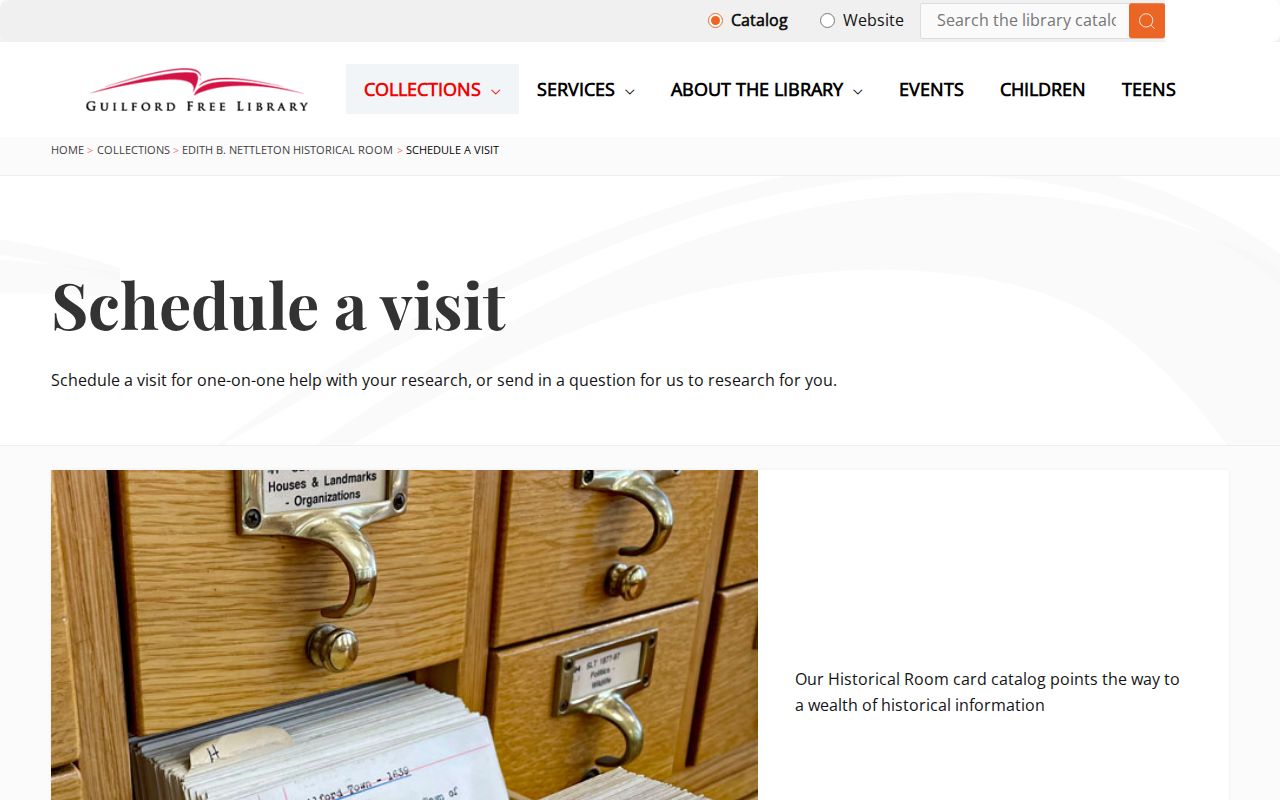
That scan-and-mail option can bridge a missing volume without suggesting that an unverified online image or person record exists.
Map Guilford Past Residents Carefully
MapXpress helps test whether an old address still points to the same parcel. Property information is updated nightly, the parcel maps were reported updated in July 2026, and displayed aerials include 2005, 2012, 2013, 2016, 2019, and 2023. Search by owner or co-owner, house number, street, or parcel ID, then preserve the MBL, map and lot, parcel shape, and any linked legal-description clue. A map is a spatial aid, not a complete past-resident file.
No verified town-wide street-renumbering year was found. A Water Street entry, a shore or island label, or a historical directory number may describe a business frontage, postal address, or older parcel label. Compare the old number with the current GIS parcel, Town street map, deed description, map or lot, and any former name. Do not join two people or transfers solely because the street text looks alike.
The Library of Congress Sanborn-search guide explains the state, city, date, and sheet approach for fire-insurance maps. A direct Guilford Sanborn item was not located, so it is a method reference rather than proof of a Guilford map year.
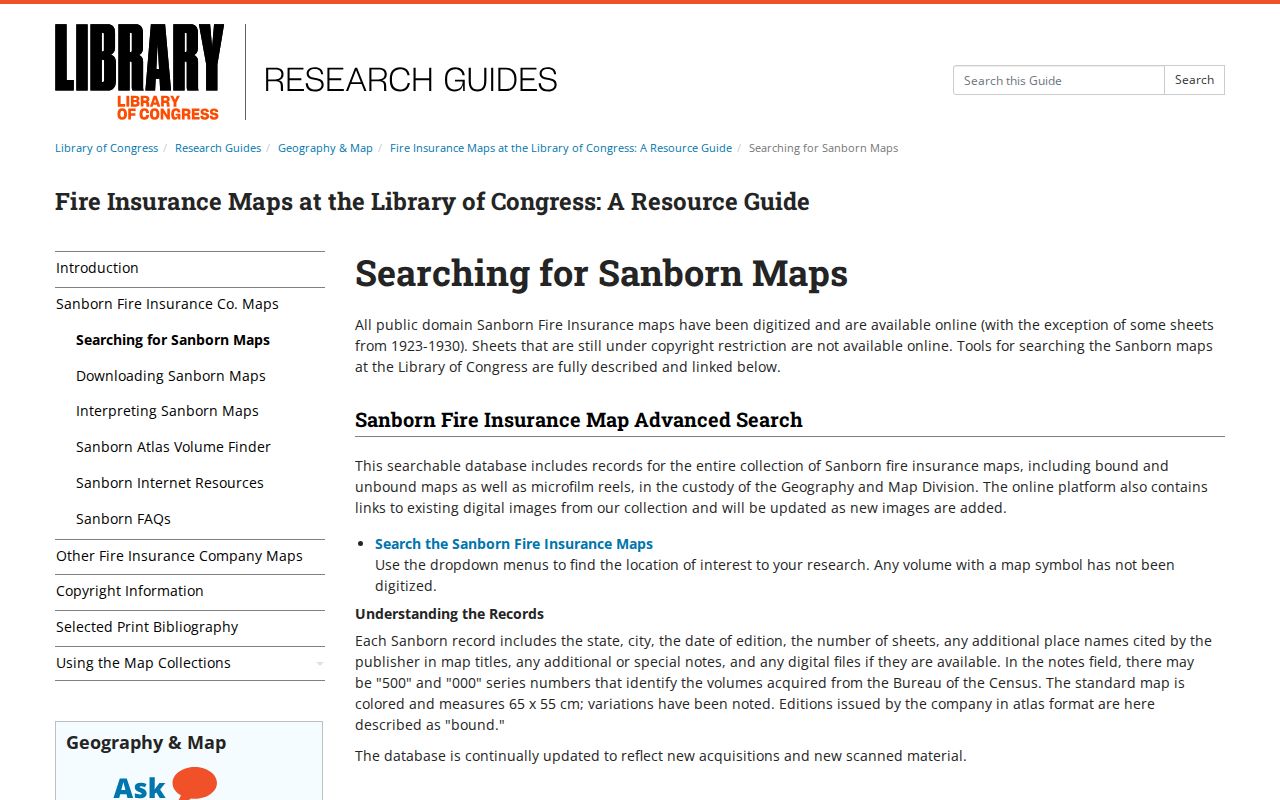
For Guilford, use the guide alongside EBN or the State Library map collections, and label the result as a research lead until a local sheet is confirmed.
A Guilford Owner Is Not Every Resident
An assessor card, deed party, tax account, or voter-status match answers a narrow question. It may identify an owner, a mailing contact, a recorded transfer party, or a current registration status. None is a complete household list. A directory can name a household or business at a street number, while a census captures a household at one enumeration date. A permit names an applicant or project connection, not necessarily every person who used the address.
Keep the physical situs, tax-mailing address, postal label, legal description, and named person in separate fields. Utility customer data and delivery records are not open household sources, and the Connecticut voter route is status-oriented rather than a townwide street list. A same-name match needs a date, address, parcel, family link, or record role before it joins a past-resident trail.
Lawful use. Guilford address research is appropriate for personal history, family research, house history, and ordinary civic curiosity. Do not use records to stalk, harass, threaten, or track a living person, and stop when a record is protected or the purpose is not lawful.
Tracing Guilford Previous Residents Through Deeds
A deed chain tracks recorded transfers, not every person who used a house. Start with the current Assessor name and legal description, find the latest purchase in RecordHub, and then use the seller's name to locate the prior transfer. Repeat while the legal description, map reference, or MBL continues to identify the same parcel. A street label can change, and the same number can describe different parcels over time, so the legal parcel carries more weight than a text-only address match.
Use this backward sequence:
- Write down the current street number and name, parcel or MBL, map and lot, legal description, mailing location, and any former place name.
- Search the current owner as grantee and capture the latest deed date, document number, book/page, grantor, legal description, and image status.
- Search that grantor as the earlier grantee, testing initials, surname variants, and a second-name AND or OR choice when available.
- Compare each hit with the map, lot, MBL, easement, and legal-description language so a similar name does not create a false chain.
- Continue back to the April 1972 online boundary, then ask for older Town Clerk books, indexes, and maps rather than treating the web cutoff as the end of the parcel history.
- Pair each transfer with a directory, census, newspaper, probate, or survey clue before calling the named party a past household member.
- Grantor and grantee
- The grantor transfers an interest; the grantee receives it. A name can appear in either role more than once.
- Chain of title
- The linked sequence of recorded transfers used to follow a parcel from one conveyance to the next.
- Legal description
- Deed or map language that identifies the land. It can preserve parcel continuity when a street number or name changes.
Past Guilford Households In Directories
Owners are only one layer of an address history. The 1913 Guilford town directory and the C. DeWitt White regional run from 1913/14 through 1928 can supply names, street numbers, business clues, and a street-order view, but the run has missing years. EBN's 1800-1930 census microfilm adds household names, ages, relationships, and locality. Newspapers and obituaries can then date a move, death, school connection, or family event.
The Guilford city directory collections page holds the detailed shelf and entry method. For a past-resident question, use those collections as dated evidence rather than as a continuous list. The 1913 Water Street clue is a useful model: identify the number, search the street section, then test the business or household in a newspaper, map, or deed record.
The Guilford Preservation Alliance survey provides another address-based lead for older properties.
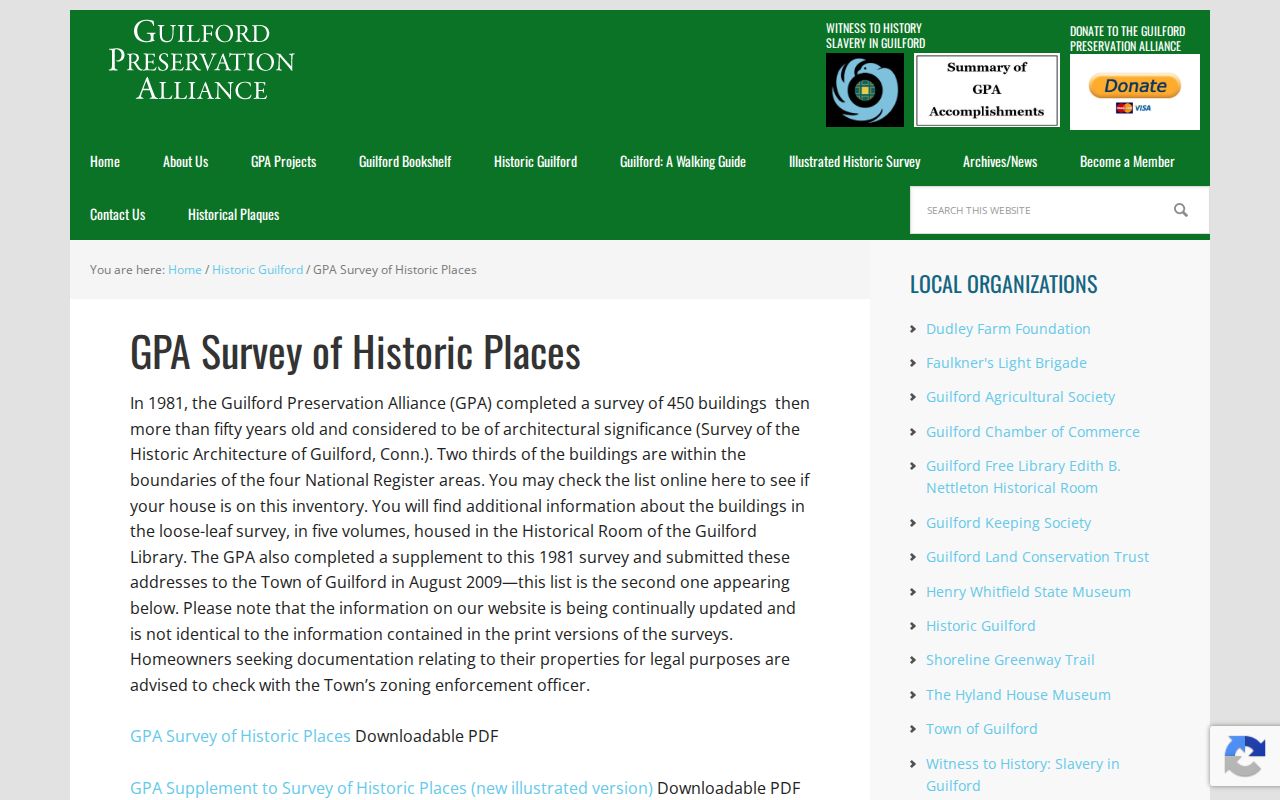
The 1981 survey covers approximately 450 buildings more than 50 years old, with about two-thirds in four National Register areas. Its five-volume loose-leaf set is in EBN, and the online presentation is not identical to the print file.
Pair the household layer in this order:
- Copy the directory's exact name, street number, town heading, and year.
- Check the nearest available census year at EBN and compare household composition and locality.
- Search Shore Line Times, Guilford Courier, Leete's Island Times, Guilford Echo, or later obituary resources for a dated event.
- Use the deed, map, or survey to decide whether the old number still points to the same parcel.
- Mark every missing year, account limit, changed number, or unverified scan in the research log.
Close A Guilford Past-Resident Trail
Use an obituary, cemetery reference, or probate file as an endpoint, not as a shortcut to a present address. Madison-Guilford Probate District records can identify an estate, fiduciary, heirs, or a dated relationship, while EBN, the Guilford Keeping Society, and the State Library can help with older burial and family clues. A later deed is the stronger confirmation that land changed hands. No single official Guilford interment search was located, so ask the repository or cemetery custodian for the exact date, name, and place.
Guilford's Town Clerk page currently advertises no-cost Cott PropertyCheck property-fraud alerts, but the relative enrollment link was malformed in the research capture. Treat that as a verification note only. Confirm the current route with the Clerk rather than using an unverified path or treating an alert service as a source of previous residents.
Before closing the file, write down the last supported owner, the last supported household, the parcel key, the source date, and the unresolved gap. A clear stopping point is more useful than a confident name attached to the wrong Guilford parcel.